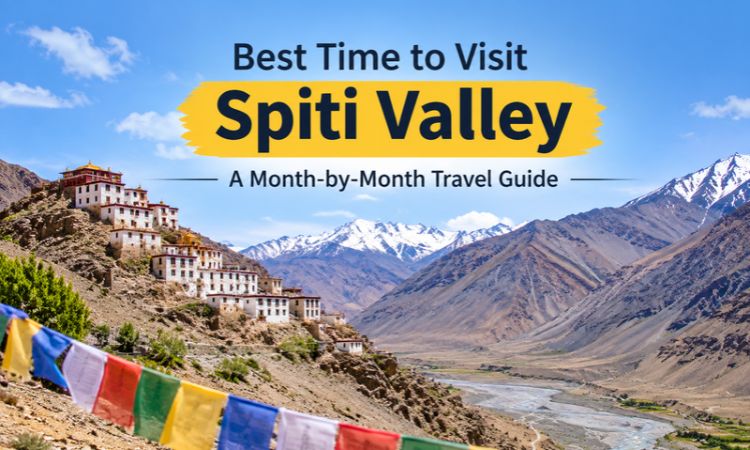
Imagine driving for hours through mountains with almost no trees, crossing small villages where life moves at its own pace, and stopping every few kilometres because the view is too good to ignore. That’s Spiti Valley. Knowing the best time to visit Spiti Valley can make your trip even more memorable. However, the trip is quite different if it’s made at the wrong time.
Water seeping through the sandstone rock walls gives guests a glimpse of local villages during summers that can be explored through distant road trips. A winter thunderstorm alters the scenery, and a short trip is an adventure. So, what is the best time to visit Spiti? June to September is the perfect period of the year for most visitors as it combines good road access with sightseeing opportunities. So the answer to that question is: here are some ways to pick the right month.
Best Time to Visit Spiti Valley: A Quick Overvie
To avoid harsh winter weather or unreliable dirt roads, schedule travel during the summer (June through September) months.
- June: A great month for road trips when roads are beginning to open up from winter.
- July and August: Good time to do sightseeing; watch for road conditions due to the monsoons.
- September: Fewer people, less traffic, better light and weather.
- Best left for experienced travelers familiar with all the risks of the road conditions and extremely cold temperatures in October-April.
A first visit is a good idea in the months of June and September. Relax in September and enjoy exploring in June!
Spiti Valley Through the Seasons
The best season to visit Spiti Valley depends on the kind of travel experience you’re looking for, as every season brings a different landscape, weather, and road conditions.
May to June: When the Valley Opens Up
May is a month of transition in Spiti. Snow is starting to melt on some roadways, but it still remains in control in upper sections. A route may be clear one day, and blocked the next, depending on the location. That’s why plans for May trips must be flexible.
It is easier to travel by June. More villages are open, accommodation is now up and running in the villages, and the days are generally fine for travel. Visit Key Monastery, head towards Langza and Hikkim or relax around Kaza.
It is easier to travel by June. More villages are open, accommodation is now up and running in the villages, and the days are generally fine for travel. Visit Key Monastery, head towards Langza and Hikkim or relax around Kaza.
July to August: Monsoon with a Catch
Spiti has relatively less rainfall due to its position in rain shadow region. However, don’t think that all the trip is safe from the monsoon.
Along the road in Kinnaur can landslides, fallen rocks and temporary road closures occur. Rainfall in another area of your course but clear conditions in Kaza.
Even July and August can be fun if you’re flexible with your travel plans! Follow safe travel routes, follow announcements, do not travel through affected areas when it is raining heavily and don’t travel during rain when conditions aren’t safe. These months may be ideal for those who are not deterred by the prospect of making impromptu travel arrangements.
September to October: Quieter Roads and Clearer Views
September is often the best month to visit Spiti Valley if you want to avoid the busiest travel period. The monsoon generally begins to withdraw, the skies often become clearer, and the valley feels less crowded.
You can spend longer at monasteries, take your time in villages and enjoy the landscape without rushing between attractions. The weather is pleasant during many daytime hours, although nights become colder.
October is less predictable. Winter begins approaching, snowfall may affect higher areas, and some routes can become difficult. If you’re planning an October visit, check local conditions close to your travel date.
November to April: Spiti in Winter
Winter is a time of the year when very few people visit Spiti. There is snow in parts of the valley, low temperatures and activities are diminished.
It is quite beautiful but travelling is not very convenient. After snowfall, the Manali route usually remains closed after the Kunzum Pass. The Shimla route is not closed but may be open for extended periods of time. Housing and transport facilities in outlying areas may be inadequate.
If the winter season is the primary reason for travelling in the Spiti region, then you should consider it as an alternative. Appropriate winter clothing, local expertise and flexibility to deal with delays.
Spiti Valley Weather and Temperature Month-Wise
Spiti is cold for much of the year. Even in summer, sunny afternoons can turn into chilly evenings. Temperatures also vary between Kaza and higher villages.
| Month | Approx. Daytime Temperature |
|---|---|
| January | -15°C to 0°C |
| February | -15°C to 2°C |
| March | -10°C to 5°C |
| April | -5°C to 10°C |
| May | 0°C to 15°C |
| June | 5°C to 20°C |
| July | 10°C to 22°C |
| August | 10°C to 22°C |
| September | 0°C to 18°C |
| October | -5°C to 15°C |
| November | -10°C to 5°C |
| December | -15°C to 2°C |
Which Route Should You Take to Spiti?
Your route matters because both approaches have different road conditions.
- Shimla to Spiti: The route passes through Narkanda, Kalpa, Nako and Tabo before reaching Kaza. It is generally the more practical option early in the season because it does not cross Kunzum Pass. The gradual climb also allows more time to adjust to the altitude.
- Manali to Spiti: This route passes through the Atal Tunnel, Gramphu, Batal and Kunzum Pass. It offers dramatic mountain scenery but is usually accessible only after snow clearance, often around late May or June.
If both routes are open, you can enter through Shimla and return through Manali. Always check current road conditions before starting your journey.
Places That Make the Journey Worthwhile
Don’t turn your Spiti trip into a race to cover every attraction. Leave time to explore these places at your own pace:
- Key Monastery: A historic monastery overlooking the Spiti River valley.
- Langza: Known for its giant Buddha statue and fossil-rich surroundings.
- Hikkim: A remote village famous for its high-altitude post office.
- Komic: A high-altitude settlement where you can experience village life.
- Chicham: A beautiful village worth including in your journey beyond Kaza.
- Dhankar: Known for its old monastery and striking location above the valley.
June to September generally offers better access to these places, although local road conditions can still affect your plans.
Where to Stay During Your Spiti Trip
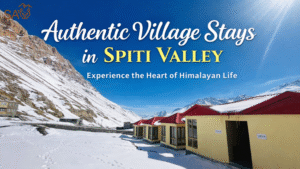
Kaza is a practical base for exploring many popular places, but staying in a smaller village can give your trip a different pace. Chicham is one option if you want to spend time away from the busier parts of the valley.
If you’re planning a stay in Spiti, explore Sau Cottages for accommodation details and booking information. During the main travel season, confirm availability before setting out.
A Few Things to Remember Before You Go
Spiti is not a destination where you should plan every hour. Here are a few tips to remember:
- Take the warmest layers, even in summer.
- Allow your body to acclimate. Do not ignore headaches, nausea or unusual breathlessness and please seek medical assistance if symptoms get worse.
- Download offline maps as mobile connectivity can be limited.
- Have some cash on hand for places that might not accept digital payments.
- Listen to the road status and weather forecasts before going from village to village.
Conclusion
For those who prefer to enjoy the outdoors without harsh winter weather, consider the month of June or September. June is a great time to travel the road and September is a great time to travel the quiet road. It can be a rewarding experience as well in July and August, but only if you take into account potential traffic delays.
Spiti is by no means a “must-see” for the sake of completing wish lists. Pick an ideal month and allow some extra time in your itinerary to explore the villages you set aside to visit. If you pass through Chicham this is the place to stay at the Sau Cottages and the time to spend this portion of the valley that is rather quiet.